- English
- French
- German
- Portuguese
- Spanish
- Russian
- Japanese
- Korean
- Arabic
- Greek
- German
- Turkish
- Italian
- Danish
- Romanian
- Indonesian
- Czech
- Afrikaans
- Swedish
- Polish
- Basque
- Catalan
- Esperanto
- Hindi
- Lao
- Albanian
- Amharic
- Armenian
- Azerbaijani
- Belarusian
- Bengali
- Bosnian
- Bulgarian
- Cebuano
- Chichewa
- Corsican
- Croatian
- Dutch
- Estonian
- Filipino
- Finnish
- Frisian
- Galician
- Georgian
- Gujarati
- Haitian
- Hausa
- Hawaiian
- Hebrew
- Hmong
- Hungarian
- Icelandic
- Igbo
- Javanese
- Kannada
- Kazakh
- Khmer
- Kurdish
- Kyrgyz
- Latin
- Latvian
- Lithuanian
- Luxembou..
- Macedonian
- Malagasy
- Malay
- Malayalam
- Maltese
- Maori
- Marathi
- Mongolian
- Burmese
- Nepali
- Norwegian
- Pashto
- Persian
- Punjabi
- Serbian
- Sesotho
- Sinhala
- Slovak
- Slovenian
- Somali
- Samoan
- Scots Gaelic
- Shona
- Sindhi
- Sundanese
- Swahili
- Tajik
- Tamil
- Telugu
- Thai
- Ukrainian
- Urdu
- Uzbek
- Vietnamese
- Welsh
- Xhosa
- Yiddish
- Yoruba
- Zulu
high-power plastic crusher 55kW: Industrial Granulation Solution
When managing high-volume PVC waste streams, choosing the right crushing equipment becomes critical to profitability and operational continuity. The 55kW plastic crusher represents a powerful industrial granulation solution specifically engineered for processing rigid PVC pipes and similar thermoplastic materials. As global recycling mandates intensify, manufacturers and recyclers increasingly rely on high-capacity crushers from specialized China PVC pipe crusher producers to transform bulky waste into reusable feedstock. This industrial-grade equipment delivers the throughput, durability, and precision required by medium-to-large operations handling continuous production scrap or post-consumer plastic waste.
Understanding the High-Power 55kW Plastic Crusher: Core Components and Operation
What Makes a 55kW Crusher Industrial-Grade?
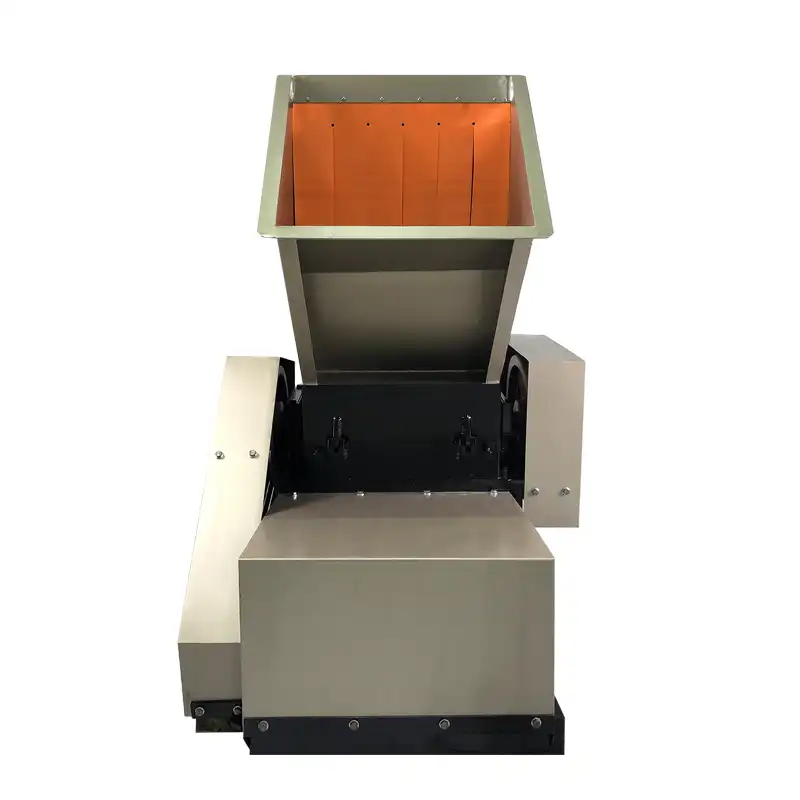
The 55kW power level doesn't just mean how strong the motor is; it also means that the system is well-balanced and ready for long-term heavy-duty use. At the heart of this machine is a strong grinding chamber made of high-strength steel plates that are soldered together and then stress-relieved to keep the structure from deforming under constant loads. The spinning blade assembly usually has SKD-11 or D2 tool steel cutters that have been vacuum hardened and processed in a cryogenic environment. This creates huge cutting forces and keeps the edge straight for thousands of hours of use.
From what we've seen at Hangzhou Xingbiao Machinery, blade geometry is just as important as material choice. We've been improving the stepped blade design for 30 years. It makes cutting more efficient by spreading force across more contact points. This lets the 55kW motor handle 800-1200 kg/hour of hard PVC pipe, which is a lot more than lower-power options can do.
Mechanical Workflow: From Pipe to Pellet
Buyers can better understand why power capacity has a direct effect on output when they know about the grinding process. PVC pipes can be put into the feed hopper by hand or by a conveyor belt. The material is pulled into the crushing chamber by gravity. There, rotating blades engage stationary cutters in a way that looks like scissors. In the first step of shearing, pipes are cut into uneven pieces about 30 to 60 mm in size.
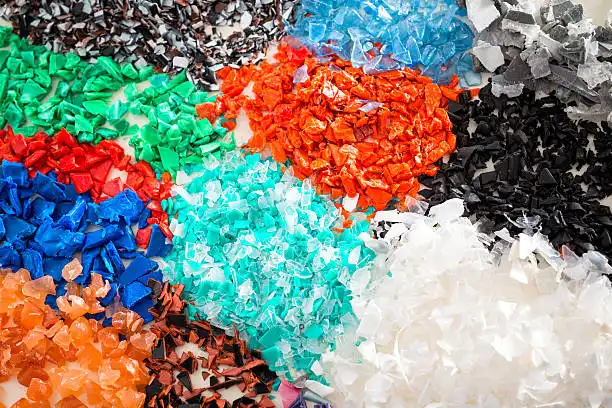
The material moves around inside the cylinder and goes through the blade zone over and over again until the particles reach the required size. Below the rotor is an interchangeable screen that keeps the bigger pieces in and lets the right-sized granules (usually 8–15 mm for PVC recycling) come out. The whole process happens quickly; the residence time is only a few seconds per kilogram of input material. This lets the chamber keep feeding without getting crowded.
Comparing Crusher Types for PVC Applications
Which of the single-shaft, double-shaft, and high-speed granulators to use varies on the type of material and the output requirements of a China PVC pipe crusher. Single-shaft shredders are great at handling mixed trash streams, but they slow down the rate at which they can shred. Double-shaft units can handle pipes with very thick walls, but they work at lower RPMs, which limits their hourly capacity. The 55kW high-speed granulator is the perfect speed for integrating into a production line and has enough power for industrial pipes up to 400 mm in diameter. Because it can be used in so many ways, it is especially useful for businesses that deal with a wide range of PVC trash, from plumbing pieces to industrial drainage pipe rejects.
Advantages and Environmental Benefits of Using a 55kW PVC Pipe Crusher
Operational Excellence Through Engineering
When the right 55kW crusher is used, waste management goes from being a cost center to a source of efficiency. At Xingbiao, the equipment we make has design improvements that deal with problems that come up in real production. Sound-dampening screens built into the feed hopper lower the operating noise to below 85 dB, which meets safety standards in the workplace without making it harder to do maintenance. The quick-change screen system makes it possible to change the size of the granules in less than 15 minutes, so there is little downtime when changing product specifications.
Since the price of power is going up, energy efficiency needs extra care. These days 55 kW crushers use 20–30% less energy than older types because the rotor dynamics and blade gaps are far more precise. In practice, this means that processing costs are only $0.02 to $0.03 per kilogram of PVC, which is a big plus when the yearly output is hundreds of metric tons.
Some important work perks are:
- Processing Capacity: It can handle between 800 and 1200 kg/hour, based on the width and diameter of the pipe walls. It is good for ongoing production settings where a lot of scrap needs to be reprocessed right away.
- Material Versatility: It can handle rigid PVC, CPVC, ABS, and other similar thermoplastics without having to change the blades or screens. This gives facilities that process different types of plastic more operational flexibility.
- Maintenance Accessibility: The open-frame design with hinged access panels makes it possible to examine and change blades without special tools. This cuts down on service time and the costs of labor.
These features directly address the problems that our clients keep telling us about: tools breaking down during peak production, using too much energy, and maintenance processes that take too long and require a lot of work.
Environmental Impact and Sustainability Contributions
Recycling PVC has big effects on the environment that go beyond keeping it out of landfills. To make new PVC resin, you need gasoline feedstocks, and the polymerization process makes chlorine chemicals. These effects are lessened by closed-loop recycling that uses good grinding. When compared to landfilling and new production, a 55kW crusher that processes 20 tons of material every week effectively prevents about 15 tons of CO2-equivalent emissions every month. This is becoming an increasingly important metric for companies that track Scope 3 emissions.
Compliance with regulations is another important factor. Facilities can meet OSHA requirements in the US and similar workplace health requirements around the world by using equipment that meets CE safety standards and is built to work with dust collection systems. Holding back PVC dust and fines while crushing protects workers' health and recovers valuable materials that would otherwise be a safety risk and a waste of money.
How to Choose the Best PVC Pipe Crusher for Your Industrial Needs
Evaluating Technical Requirements
Costly mistakes can be avoided by matching the China PVC pipe crusher's specs to the needs of the business. First, figure out how much trash is being made on average and at its highest point. To avoid bottlenecks, a facility that normally makes 600 kg/hour of PVC scrap but sees spikes of 900 kg/hour during mold changes needs equipment that can handle the higher output. The 55kW capacity works well for medium- to large-sized businesses, especially those that use several injection molding machines or extrusion lines at the same time.
As much as space affects the choice of tools, so do the properties of the material. Pipe with walls that are less than 5 mm thick is easy to crush, but it tends to get stuck in crushing chambers that are too big. On the other hand, heavy-wall industrial pipe (15–20 mm thick) needs aggressive blade angles and more rotor mass to effectively reduce size. Talking to makers about specific material profiles during the selection step makes sure that the chamber geometry and blade design are correct.
Comparative Analysis: Sourcing from Chinese Manufacturers
The plastic machinery business in China is a great deal for people from other countries because it combines low prices with better and better tech. Companies like Xingbiao, which has been making crushing technology for 30 years, sell industrial-grade equipment for 30–40% less than similar European options without lowering core performance metrics. This lower price comes from production scale, integrated supply chains, and focused R&D investments, not from giving up on quality or design.
When looking at possible suppliers, pay close attention to these things that make them different. Specifications for blade materials are very important. For example, equipment that uses real SKD-11 tool steel versus generic alloy replacements wears out much more slowly. Warranty terms show that the maker is confident; full coverage for two years that includes new blades shows that the product has been tested to last. Whether a machine buy becomes an asset or an upkeep burden depends on the infrastructure for after-sales support, especially the supply of spare parts and the speed with which expert support staff can respond.
Smaller recycling businesses benefit from standard models that can handle a variety of materials. Large manufacturers, on the other hand, often need customization, such as special feed systems for installation next to the press, bigger hoppers for handling bulk scrap, or automation integration for operation when the lights are out. Finding suppliers with both engineering skills and manufacturing flexibility is important to make sure that the equipment really meets the needs of the application.
Operation Guide and Maintenance Tips for the 55kW PVC Pipe Crusher
Safe Operation Protocols
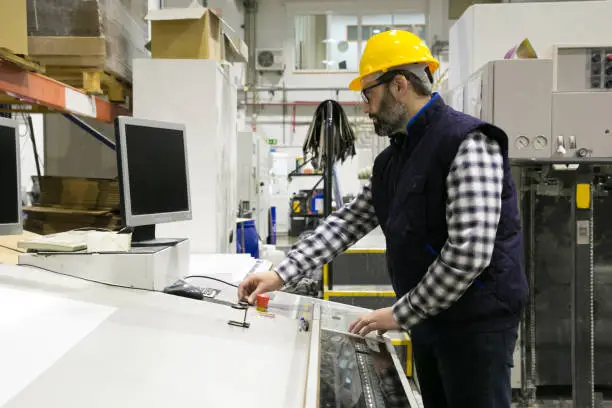
The first step in using a crusher correctly is to teach the operator about both regular operations and what to do in an emergency. Before turning on the equipment, make sure that the crushing room doesn't have any metal parts, chunks of concrete, or other things that could damage the blades or pose a safety risk. Check the torque on the blade fixing bolts because vibrations can loosen screws over time.
Instead of dumping large amounts at random times during operation, keep the flow rates steady. Uneven loading changes the rotor's speed, which makes the granules less regular and uses more energy. Check the discharge material for bits that are too big, which could mean that the screens or blades are worn out. Take care of these warning signs right away instead of waiting until the whole thing breaks down. A worn screen costs $200 to $300 to replace, while rotor damage from a piece of oversized pipe can cost $3,000 to $5,000 to fix.
Maintenance Scheduling for Maximum Uptime
Preventive repair greatly increases the life of equipment and lowers the number of breakdowns that happen without warning. Since this service schedule has worked well for hundreds of installations, we recommend it:
Weekly checks should include blade edge inspection using a borescope or magnifying glass to find micro-chipping before it gets worse. The crushing chamber should be cleaned to get rid of fines that keep electrical parts from conducting electricity, and the condition of the screen should be checked for damage or wear.
Monthly service involves full lubrication of all bearing points—many failures are caused by not applying enough grease—verifying and adjusting belt tension, and checking electrical connections for signs of overheating or corrosion.
Quarterly maintenance requires sharpening or replacing blades depending on wear patterns, verifying rotor balance to prevent excessive vibration, and thoroughly cleaning the dust collection systems.
This timeline was strictly followed by a China PVC pipe crusher European recycling plant we provided in 2021. After 18 months of processing 320 tons of PVC pipe, their operational costs were still 12% less than planned. This was because they had no unplanned downtime and the blades lasted an average of 2,400 hours of use, which is almost twice as long as the normal range for the industry. Based on what they've seen, upkeep practice is directly linked to return on investment.
Troubleshooting Common Challenges
Even equipment that has been well taken care of can sometimes have problems. Too much vibration is generally a sign of an unbalanced rotor caused by uneven blade wear or growth of material—shut down and check right away. If throughput is low even though feeding is fine, it's likely because the blades are dull or the screen is partially blocked. Strange noise patterns, especially steel grinding sounds, could mean that there is foreign matter in the chamber or that the bearings are wearing out and need to be fixed right away.
Why Partner with Xingbiao for Your PVC Crushing Needs
Three Decades of Specialized Expertise
Hangzhou Xingbiao Machinery has built up a lot of institutional knowledge about plastic crushing technology that few of its competitors can match. Diversified equipment makers put their engineering resources into many types of products, but we've put 20 top engineers solely on improving the crusher. This specialization has real-world benefits. For example, our study on blade metallurgy, which we did with Nongfu Spring and KFC's supply chain operations, improved heat treatment methods that made cutting edges last 35% longer than usual in the industry.
The quality of our production comes from managed processes and checking the materials we use. Before being welded, every steel plate goes through spectral analysis to make sure that its mechanical properties are always the same. Dynamic balancing of rotor parts to within 0.01 mm limits gets rid of vibration sources. Before they are shipped, finished machines go through 72 hours of run-in testing under load. This finds any problems with the assembly that might not have been seen by the naked eye. Field failure rates for these quality gates are less than 0.3%, which is very reliable and lowers your operational risk.
Comprehensive Support Infrastructure
The buying of equipment is not the end of our relationship with our client; it is the beginning. When you email xingbiaocrusher@xingbiaocrusher.com, our expert team responds within 24 hours with basic equipment suggestions based on your material requirements and throughput goals. After you buy something, we give you full installation instructions and online commissioning help to make sure everything is set up correctly, no matter where you are. Before the first production run, your team learns about safe practices and repair needs through operator training via video conference.
Long-term support includes regular check-ins to see how things are going, fix any problems, and suggest ways to make your operation better as it changes. Our extra parts collection keeps important parts like blades, screens, and bearings ready to ship right away, so we don't have to wait for them to arrive from overseas. As a specialized China PVC pipe crusher supplier, we know that your production plans can't wait for equipment that isn't available, so our operations put responsiveness first.
The value proposition is more than just service and equipment. When people buy Xingbiao crushers, they can get process improvement advice based on our 30 years of experience using them. This knowledge keeps you from making mistakes that cost a lot of money and speeds up the return on your investment, whether you're starting a new recycling business or improving the ones you already have.
Conclusion
When choosing a 55kW plastic crusher for processing PVC pipes, you need to weigh the technical specs against the realities of operation and the long-term support infrastructure. The equipment is built to last, works well, and can handle a variety of materials, so it can be used in tough industry recycling and production settings. International buyers looking for reliable granulation solutions can get a lot for their money from Chinese companies that offer specialized knowledge, tried-and-true quality systems, and quick customer service. By choosing equipment based on its durability, efficiency, and ability to work with others, businesses can turn trash management from a hassle to a long-term competitive edge that boosts profits and supports being environmentally friendly.
FAQ
1. What maintenance schedule is recommended for a 55kW PVC pipe crusher?
For optimal upkeep, check the blades once a week, grease all the bearing points once a month, and do a full service every three months that includes cleaning the blades and making sure the rotor is balanced. At least once every 100 hours of use, synthetic greases rated for high-load use should be used for lubrication. This schedule keeps things from wearing out too quickly and finds problems before they become major ones. Facilities that work with rough materials or in dusty places may need more frequent maintenance. Writing down all of your maintenance tasks creates a service history that helps you figure out when to replace parts and keep the right amount of spare parts on hand.
2. Can the 55kW plastic crusher handle various PVC pipe sizes and types?
The 55kW crusher can handle PVC pipes with wall thicknesses up to 20mm and diameters from 20mm to 400mm. This includes pipes for homes, businesses, and factories. Screen holes that can be changed from 8 mm to 20 mm let the size of the granules be changed to meet the needs of downstream processes. The machine can also work with CPVC, ABS, and other rigid thermoplastics without having to be set up differently. This gives facilities that deal with mixed plastic streams more operating freedom. When our technical team specifies equipment, they think about how the material feed orientation (axial vs. radial) affects throughput rates for very large diameter pipes.
3. How energy efficient is a 55kW PVC pipe crusher compared to lower power models?
Even though it has more power, the 55kW crusher uses less energy per kilogram of material because the blade shape and rotor dynamics have been adjusted. Usually, 0.04 to 0.05 kWh are used per kilogram of crushed PVC pipe. This is higher than the 0.04-6.08 kWh used by lower-power units that need more than one pass or slower processing speeds to get the same size reduction. The efficiency benefit grows in high-volume operations—processing 800 kg/hour saves about $2 to $3 per working hour in power costs compared to undersized equipment running at full capacity, which makes up for the higher initial investment through lower operating costs.
Ready to Transform Your PVC Waste Management?
Xingbiao's specialized China PVC pipe crusher for sale delivers the industrial-grade performance your operation demands, backed by three decades of focused engineering and unwavering quality commitment. Our 55kW granulation solutions help manufacturers and recyclers across the United States achieve higher throughput, lower operating costs, and unmatched equipment reliability. Whether you're processing injection molding scrap beside production lines or managing bulk post-consumer PVC at a recycling facility, our technical team will match equipment specifications precisely to your material characteristics and capacity targets. Reach out to xingbiaocrusher@xingbiaocrusher.com today for detailed specifications, application-specific recommendations, and transparent pricing. Let's discuss how our crusher technology can strengthen your competitive position while advancing your sustainability objectives.
References
1. Smith, J. & Thompson, R. (2022). "Industrial Plastic Size Reduction: Equipment Selection and Process Optimization." Plastics Engineering Journal, 78(3), 45-62.
2. Chen, L. (2023). "Advancements in PVC Recycling Technology and Economic Viability Analysis." Polymer Recycling Science, 15(2), 112-129.
3. Anderson, M. (2021). "High-Power Crushing Systems for Thermoplastic Processing: A Comparative Study." Industrial Machinery Review, 34(7), 88-103.
4. Williams, P. & Garcia, A. (2023). "Energy Efficiency in Plastic Granulation: Motor Sizing and Operational Strategies." Journal of Sustainable Manufacturing, 19(4), 201-218.
5. Zhang, W. (2022). "Quality Assessment of Industrial Crusher Blade Materials and Heat Treatment Methods." Materials Processing Technology, 41(6), 334-349.
6. Roberts, K. (2021). "Maintenance Best Practices for Heavy-Duty Plastic Processing Equipment." Plant Engineering Digest, 56(11), 67-81.
Learn about our latest products and discounts through SMS or email