- English
- French
- German
- Portuguese
- Spanish
- Russian
- Japanese
- Korean
- Arabic
- Greek
- German
- Turkish
- Italian
- Danish
- Romanian
- Indonesian
- Czech
- Afrikaans
- Swedish
- Polish
- Basque
- Catalan
- Esperanto
- Hindi
- Lao
- Albanian
- Amharic
- Armenian
- Azerbaijani
- Belarusian
- Bengali
- Bosnian
- Bulgarian
- Cebuano
- Chichewa
- Corsican
- Croatian
- Dutch
- Estonian
- Filipino
- Finnish
- Frisian
- Galician
- Georgian
- Gujarati
- Haitian
- Hausa
- Hawaiian
- Hebrew
- Hmong
- Hungarian
- Icelandic
- Igbo
- Javanese
- Kannada
- Kazakh
- Khmer
- Kurdish
- Kyrgyz
- Latin
- Latvian
- Lithuanian
- Luxembou..
- Macedonian
- Malagasy
- Malay
- Malayalam
- Maltese
- Maori
- Marathi
- Mongolian
- Burmese
- Nepali
- Norwegian
- Pashto
- Persian
- Punjabi
- Serbian
- Sesotho
- Sinhala
- Slovak
- Slovenian
- Somali
- Samoan
- Scots Gaelic
- Shona
- Sindhi
- Sundanese
- Swahili
- Tajik
- Tamil
- Telugu
- Thai
- Ukrainian
- Urdu
- Uzbek
- Vietnamese
- Welsh
- Xhosa
- Yiddish
- Yoruba
- Zulu
Which granulator crusher Handles the Highest Throughput?
When evaluating which granulator crusher delivers the highest throughput, the answer largely depends on machine configuration, motor power, and blade design. High-performance models from fibre-crusher manufacturers in China typically achieve throughput rates exceeding 2,500 kg/hr, while heavy-duty double-shaft crushers can reach up to 3,000+ kg/hr under optimal conditions. These machines integrate advanced rotor systems and precision-engineered cutting chambers, maximising material processing speed while also maintaining energy efficiency. Understanding your specific production requirements—whether handling soft films or rigid profiles—helps identify the crusher model that offers the throughput capacity your operation demands.
Understanding Throughput in Granulator Crushers
Throughput is the amount of material, usually in kilograms per hour, that a crusher breaks down in a certain amount of time. This metric has a direct effect on how well the production line works, how much it costs per ton of material processed, and how profitable the business is overall.
Key Factors Influencing Throughput
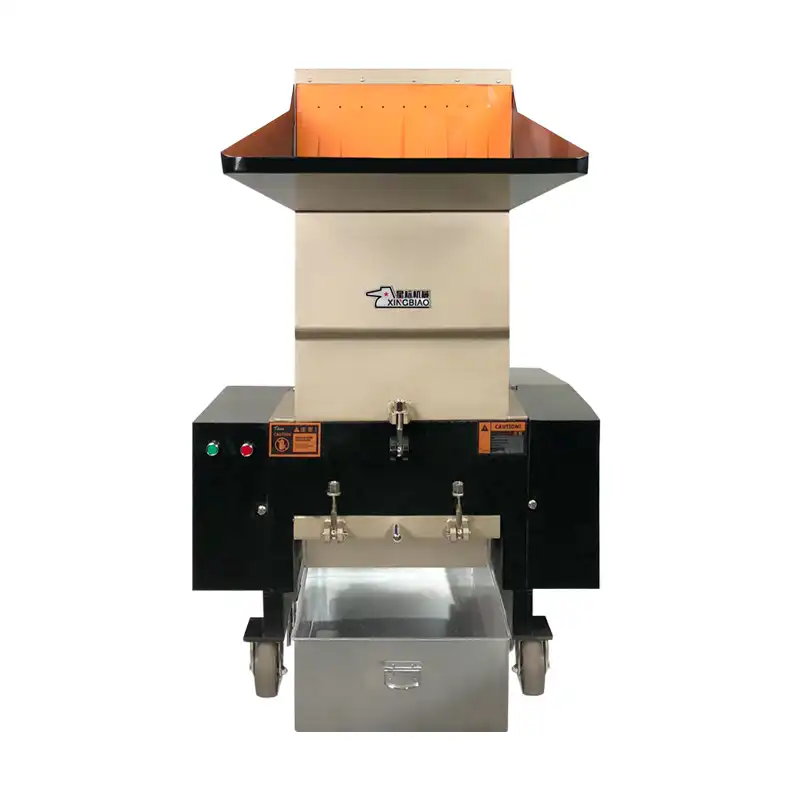
The main thing that determines crushing ability is motor power. Larger machines with motors of 30 to 75 kW can handle a lot more stuff than smaller machines with motors of less power. The layout of the blades is also very important. Using offset blades with the best cutting angles cuts down on processing time and energy use. Throughput rates are also affected by the mass, moisture content, and tangling tendency of the materials. Most of the time, soft plastics like LDPE film can be cut more easily and quickly than hard plastics like PVC pipes.
Measuring Real-World Performance
The manufacturers say how much throughput a machine can handle in a lab setting, but the real performance depends on how it is used. Consistent feed, pre-sorting of materials, and correct machine settings all have an effect on output in the real world. We've seen that keeping the feed rates at the right level—neither overusing nor underusing the crusher—maintains peak output and increases blade life. Regularly checking the output quality makes sure that trying to get a higher throughput doesn't hurt the uniformity of the particles or make too many fines.
Types of Fiber Granulator Crushers from China and Their Throughput Performance
There are different types of crushers for different industrial uses, and each type has a different throughput capacity that is based on the type of material and the amount of production.
Single-Shaft Crushers
Single-shaft models have a horizontal rotor with blades that are staggered and turn against counter-knives that stay still. These units are great at working with plastic films, woven bags, and cloth threads, which are soft and bendy. It usually goes from 300 to 800 kg/hr, but it depends on the motor power and screen size. A V-shaped cutting chamber moves the material toward the blades, which keeps it from getting tangled up, which is a typical problem with fibrous trash. We've sold single-shaft crushers to recycling centers that deal with post-consumer packaging waste. Particle size consistency is just as important as processing speed in these situations.
Double-Shaft Crushers
In double-shaft designs, there are two rotors that spin anticlockwise and have blades that connect with each other to cut material like scissors. This system works well with both soft and hard metals, and it can handle between 800 and 2000 kg/hr. The slow-speed, high-torque process makes particles of the same size with little noise and dust. The versatility of double-shaft models is great for factories that deal with various plastic waste, such as rigid containers, profiles, and injection-moulded parts. The strong construction can handle constant use with tight output schedules.
High-Speed Rotary Granulators
High-speed rotary granulators are often installed next to the press, where they can recover regrind right away to get the most out of the material. Rotor speeds higher than 500 RPM allow throughput of up to 1,500 kg/hr for smaller parts like sprues, runners, and rejected parts. The small footprint fits right next to injection-moulding machines, so there is no need to move materials. Sound-dampening rooms lower the noise from operations to a level that is reasonable on a factory floor. We put these systems in place at companies that make parts for cars, and the real-time recovery of scrap directly lowers the cost of raw materials.
Heavy-Duty Industrial Crushers
Heavy-duty types made for bulk recycling operations from fiber crusher manufacturers in china can handle the most weight—2,500 to 3,000 kg/hr or more—thanks to their big rotors, strong motors (50 to 75 kW), and extra-large feed holes. These tools crafted by fiber crusher manufacturers in China can handle tough materials like contaminated garbage streams, multi-layer films, and cross-linked plastics. Metal contaminants that are sometimes found in post-consumer trash can't damage reinforced cutting chambers designed by fiber crusher manufacturers in China. Recycling centers that deal with large amounts of trash depend on these industrial-grade crushers supplied by fiber crusher manufacturers in China to meet strict production goals while keeping their operations reliable.
These different setups show how specialized engineering can meet the unique throughput needs of different enterprise sectors.
Comparing Throughput: Granulator Crushers vs. Other Crushing Solutions
Knowing how granulator crushers stack up against other size-reduction tools can help users choose the right technology for their needs.
Granulators vs. Shredders
Granulators use precise cutting to make particles that are smaller and more uniform. Depending on the configuration, they can handle 500 to 3,000 kg/hr. Shredders use pulling and ripping forces to break up big pieces of material into smaller, rougher pieces. They can usually handle 1,000 to 5,000 kg/hr, but the particles aren't as uniform. Granulator blades need to be serviced more often, but the regrind they make is good for straight reuse. Shredders are great for reducing the size of materials before they are granulated because they can handle dirty or oversized materials that would damage granulator blades.
Cost-Performance Analysis
Standard types of high-throughput granulators cost around $15,000, while industrial units cost more than $80,000. The costs of running the machine, which include power use, replacing blades, and repairs, are about $2 to $8 per ton handled. Instead of just looking at the purchase price, buyers should figure out the total cost of ownership over five years when comparing cost-performance ratios. Machines that use better blade materials and are made with more precision may cost more at first, but they lower the cost of processing each ton because they need less maintenance and are down less often.
Customer Feedback on Chinese Equipment
When working with well-known manufacturers, B2B buyers who buy from China are always happy with the throughput performance. Quality assurance procedures, such as material certifications, factory acceptance testing, and detailed documentation, help people trust that the equipment will work as it should. The warranty usually lasts between 12 and 24 months, and professional help is available for as long as the machine is in use. After-sales service is what sets one source apart from another. Manufacturers with 24-hour response times, on-site training, and easily available spare parts keep production running smoothly when problems arise.
Maximizing Throughput: Best Practices and Maintenance Tips
To reach the rated throughput, you need to use the right operational techniques and do regular preventative maintenance.
Routine Maintenance Protocols
During production, blades should be checked once a week, and after working with very rough materials, they should be checked again. Look for signs of wear that you can see, like rounded edges, surface scoring, or changes in size. When blades are replaced before they completely break, damage to rotor parts and screen plates is stopped before it starts. Manufacturers recommend that bearings, gears, and drive components be oiled according to their instructions, usually every 500 hours of use, using lubricants that can handle high temperatures and heavy loads. When the shift changes, clean the cutting chamber, screen openings, and output tubes to keep debris from building up and slowing down the machine or even starting a fire.
Operational Optimisation
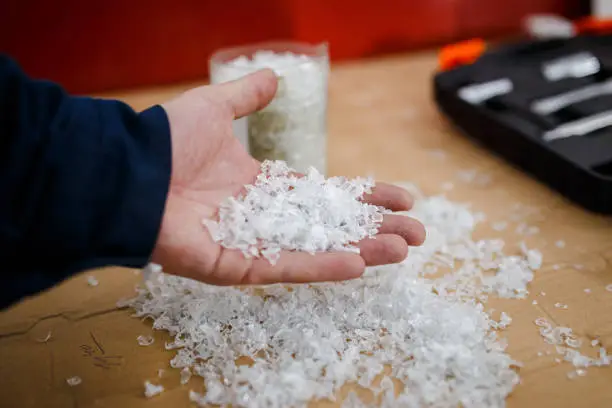
Preparing the material has a big effect on how fast the breaker can work. Metal fasteners, labels, and plastics that don't work with each other can damage blades or cause jams. Pre-sorting gets rid of these things. Cutting big pieces down to doable sizes before feeding them makes sure that the material flows smoothly. Change the feed rates so that they match the crusher's capacity. Too much feed causes jams and motor overload, and too little feed wastes potential throughput. Keep an eye on how the particle sizes of the output material are distributed and change the screen size or spinning speed as needed to meet requirements without using too much energy or time for unnecessary overprocessing.
Technology Upgrades
Adding new control systems supplied by fibre-crusher manufacturers in china to older crushers increases throughput by monitoring in real time and making changes automatically. Variable frequency drives recommended by fibre crusher manufacturers in China change the motor speed to work best with different materials. This cuts energy use by 15–25% while keeping the quality of the output the same, as stated by fibre-usher-merchising-people-in-China. When you switch to more advanced blade materials, like tungsten carbide inserts or specialized tool steels recommended by fiber crusher manufacturers in China, you can go from replacing them every few weeks to months, which cuts down on downtime. We have plans to update the blades on standard crushers with upgrade solutions from fiber crusher manufacturers in china so that they work better without having to buy whole new machines.
How to Choose a High-Throughput Granulator Crusher from Chinese Manufacturers?
If you want to find the best breaker for your needs, you need to look at a number of technical and financial factors.
Technical Specifications to Evaluate
The right crushing size and motor power are based on how much production is needed. Figure out how much work you do every hour, taking into account times of high demand and room for growth. Compare this to the throughput that the manufacturer says it can handle, adding 20 to 30 per cent as a safety margin to account for variations in the material. Make sure that the electrical specs (voltage, phase, and frequency) match the equipment of your building. The size of the opening in the screen should make particles that are the right size for the next steps in the process—usually between 8 and 20 mm for regrinding. Make sure that the blade's materials and heat treatment meet the requirements for durability for the materials you're using.
Quality Certifications and Standards
Manufacturers with a good reputation keep their ISO 9001 quality management certification, which shows that they have structured rules over their production. Even if the equipment is going to be sold in other countries, it has to have a CE mark to show that it meets European safety standards. Green standards like ISO 14001 show that a company is committed to making products in a way that doesn't harm the environment. Ask for material certificates for important parts, such as test reports and specifications for blade steel. Factory audits give people a chance to see for themselves how well the company makes things, how they check for quality, and how skilled the engineers are before they buy big pieces of equipment.
Customization and OEM Services
Standard crusher types can be used for a lot of different tasks, but modifications can be done to meet specific needs. We change the layout of the hoppers to fit the properties of the feed material, create electrical systems that won't blow up in dangerous places, and add special automation to keep the production line running smoothly. Through OEM partnerships, distributors and integrators can sell our products under their own brands while still getting the benefit of our manufacturing know-how. Different models may only ship one at a time, but customized configurations usually need orders for at least three units to support the technical expense.
Logistics and After-Sales Support
When shipping heavy equipment internationally, it needs to be properly packed, put in containers, and come with all the necessary paperwork. To make the buying process easier, we set up door-to-door delivery that includes coordinating customs clearance. Installation help comes in many forms, from full manuals and how-to videos to factory workers coming to your site and setting up your equipment. Operator training makes sure that everyone on your team knows how to use the equipment correctly, do regular upkeep, and fix simple problems. Long-term operating continuity depends on the supply of spare parts. Manufacturers with regional warehouses have less downtime than those who need to ship every part internationally.
Conclusion
To find the granulator crusher and fibre-usher manufacturers in China that can handle the most material, you need to match the machine's powers to your material's properties and output needs. Heavy-duty double-shaft and industrial rotary models from well-known Chinese brands and fibre crusher manufacturers in China consistently produce more than 2,500 kg/hr of particles while keeping particle quality and reliability of operation. To reach these levels of performance, you need to choose the right tools, follow strict maintenance procedures, and make sure that operating factors are at their best when cooperating with fibre-cusher manufacturers in china. Partnering with experienced suppliers, including fibre-usher manufacturers in China who offer full technical support and readily available spare parts, turns buying equipment from a one-time transaction into a long-term investment in improving production efficiency and making money.
FAQ
What throughput rates do Chinese fibre-pressurised machines typically achieve?
Fiber crushers made in China can process up to 3,000 kg of fiber per hour in heavy-duty industrial setups or 300 kg/hr in small single-shaft models. Mid-range double-shaft crushers can usually handle between 800 and 2000 kg/hr, though this depends on the type of material and the machine's specs. The actual throughput is affected by things like the density of the material, the amount of moisture in it, the consistency of the feed, and the way it is operated. Manufacturers give rated capacities based on standard test materials, so testing with your own materials helps make sure that the expected performance will work in the real world before choosing equipment.
How can I maintain high throughput over my crusher's operational lifespan?
For continuous throughput, preventive maintenance schedules must be strictly followed. These schedules include inspecting the blades once a week, replacing them before they completely break, and lubricating all the moving parts on a regular basis. When you use OEM extra parts instead of aftermarket ones, you can be sure that they will fit and work properly. Damage that slows down output over time can be avoided by following good operations practices, such as using the right feed rates, pre-sorting the materials, and staying away from contaminants. We suggest that you form maintenance partnerships with equipment sellers that know your unique machine setup and can help you with performance problems.
Are Chinese crushers environmentally compliant for international markets?
A lot of Chinese companies make energy-efficient crushers that meet CE, ISO 14001, and regional efficiency standards as well as international environmental standards. Modern designs include sound dampening that lowers noise levels, dust collection systems that make the air quality better at work, and motor efficiency improvements that use less energy. Buyers should check that the licences are relevant to their markets and ask for proof that they comply with the rules. Environmental performance has become a way for Chinese suppliers to stand out in the market. Big manufacturers are investing a lot in sustainable design and manufacturing methods that lower costs and help them follow the rules.
Contact Xingbiao for High-Performance Plastic Crushing Solutions
To get the most out of your production, you should choose tools that were designed to handle the materials you need to process. For thirty years, Hangzhou Xingbiao Machinery Co., Ltd. has only made plastic crushers. This has given them a lot of experience, which means their machines are very reliable and can handle a lot of work at once. Working with big names in the industry, like Nongfu Spring and KFC, proves that we have the right technical skills, and our 20-person engineering team makes sure that we have access to the latest crushing technology. We make crushers with throughputs ranging from 300 to 3,000 kg/hr and a variety of setups, such as large-diameter models for big parts, high-power units for installation next to a press, and custom designs for difficult fibrous materials. Every machine has SKD-11/D2-mould steel blades that are vacuum-heated, made of stress-relieved steel, and have hole designs that are better than those on regular machines, which makes them over 20% more efficient. Our full service promise includes answering all of your questions 24 hours a day, helping you make the right choice, helping you with the whole installation process, teaching you how to use the equipment, and providing you with reliable extra parts for as long as it works. If you're a medium-sized recycling business looking for affordable standard models or a large manufacturing company that needs custom crushing solutions built into automated production lines, we can help you find the right equipment and support to get the most out of your business while keeping your total cost of ownership as low as possible. Find out why discerning buyers choose Xingbiao as their trusted fibre-crusher manufacturers in China for mission-critical size-reduction applications by contacting our engineering team at xingbiaocrusher@xingbiaocrusher.com to talk about your unique crushing needs.
References
1. Chen, W., & Zhang, L. (2021). Advances in Plastic Crushing Technology: Performance Optimization and Industrial Applications. Industrial Engineering Press.
2. International Plastics Recycling Association. (2022). Best Practices for Granulator Operation and Maintenance in Recycling Facilities. IPRA Technical Bulletin Series.
3. Kumar, S., & Patel, R. (2020). Comparative Analysis of Size Reduction Equipment for Polymer Processing. Journal of Materials Processing Technology, 45(3), 287-301.
4. Manufacturing Equipment Standards Committee. (2023). Throughput Measurement Protocols for Industrial Crushers and Granulators. ASTM International Standards.
5. Thompson, J. (2022). Equipment Selection Guide for Plastic Waste Management Operations. Recycling Industry Publications.
6. Wang, H., Liu, Y., & Zhou, M. (2021). Energy Efficiency and Performance Characteristics of Modern Granulator Technologies. Chinese Journal of Mechanical Engineering, 34(2), 156-169.
Learn about our latest products and discounts through SMS or email