- English
- French
- German
- Portuguese
- Spanish
- Russian
- Japanese
- Korean
- Arabic
- Greek
- German
- Turkish
- Italian
- Danish
- Romanian
- Indonesian
- Czech
- Afrikaans
- Swedish
- Polish
- Basque
- Catalan
- Esperanto
- Hindi
- Lao
- Albanian
- Amharic
- Armenian
- Azerbaijani
- Belarusian
- Bengali
- Bosnian
- Bulgarian
- Cebuano
- Chichewa
- Corsican
- Croatian
- Dutch
- Estonian
- Filipino
- Finnish
- Frisian
- Galician
- Georgian
- Gujarati
- Haitian
- Hausa
- Hawaiian
- Hebrew
- Hmong
- Hungarian
- Icelandic
- Igbo
- Javanese
- Kannada
- Kazakh
- Khmer
- Kurdish
- Kyrgyz
- Latin
- Latvian
- Lithuanian
- Luxembou..
- Macedonian
- Malagasy
- Malay
- Malayalam
- Maltese
- Maori
- Marathi
- Mongolian
- Burmese
- Nepali
- Norwegian
- Pashto
- Persian
- Punjabi
- Serbian
- Sesotho
- Sinhala
- Slovak
- Slovenian
- Somali
- Samoan
- Scots Gaelic
- Shona
- Sindhi
- Sundanese
- Swahili
- Tajik
- Tamil
- Telugu
- Thai
- Ukrainian
- Urdu
- Uzbek
- Vietnamese
- Welsh
- Xhosa
- Yiddish
- Yoruba
- Zulu
china single roll crusher wholesaler: Coal & Sintered Ore Crushing
When sourcing industrial crushing equipment, B2B buyers often face a pivotal decision: whether to invest in coal and sintered ore processing machinery or plastic recycling crushers. While single roll crushers excel at handling brittle materials like coal and sintered ore through compression and impact forces, many U.S. manufacturers discover that their real bottleneck lies in plastic waste management. Interestingly, the same Chinese wholesale network that supplies coal crushers also provides specialized plastic crushing solutions. As the Chinese crusher plastic supplier China marketplace continues expanding, understanding the distinctions between these technologies becomes essential for procurement managers seeking cost-effective, durable equipment that addresses their actual production challenges rather than theoretical needs.
Understanding Single Roll Crushers for Coal & Sintered Ore Crushing
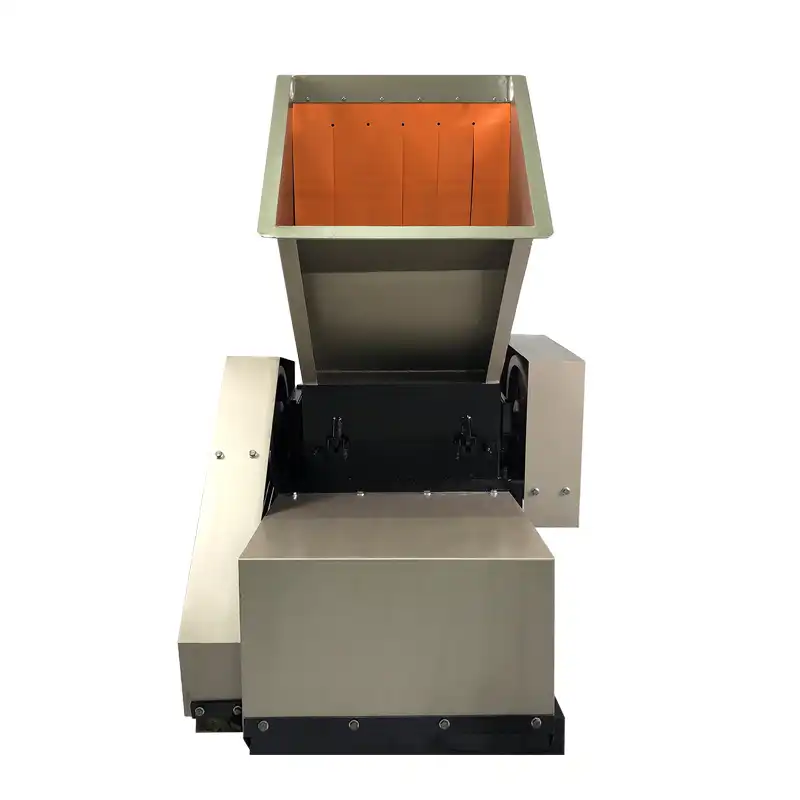
A rotating toothed roll pushes against a fixed breaker plate in a way that is unique to single roll crushers. This applies compressive and shearing forces to break up materials. This design works really well for coal, sintered ore, limestone, and other similar brittle materials with a medium hardness level. The spinning roll usually has replaceable teeth or pieces that grab and pull the material down, while the breaker plate acts as resistance, breaking the material along its natural weak spots.
Working Principles and Material Compatibility
When material goes into the feed bin and hits the spinning roll surface, the crushing process starts. When the teeth are designed in a certain way, centrifugal force pulls material into the breaking zone, where it is compressed. The output size is set by the gap between the roll and the breaker plate. This gap can be changed from 25 mm to 100 mm depending on the needs of the application. This system works best with rigid materials instead of flexible ones, which is why coal processing plants like this technology so much.
The amount of wetness in a material has a big effect on its performance. Coal with less than 8% moisture works well, but coal with more than 8% moisture can get clogged. Because sintered rock is dry and porous, it usually doesn't cause as many problems when it comes to wetness. Temperature is also important—materials that are heated above 400°C may need special roll coats to keep them from getting damaged by the heat.
Technical Specifications from Chinese Manufacturers
Chinese companies make a wide range of single roll crushers, from small ones with a diameter of 500 mm that can handle 50 tons per hour to huge ones with a diameter of 1200 mm that can handle 300 tons or more per hour. Motor power ranges from 30kW to 250kW, depending on the configuration. The normal range for roll speeds is between 60 and 120 RPM. Slower speeds make bigger bits, and faster speeds make smaller ones.
The standard of building is what sets high-end suppliers apart from low-cost options. High-quality units have welded steel plate frames that have been treated to relieve stress. This makes sure that the dimensions stay stable even when the unit is in use all the time. Roll systems use heavy-duty bearings that can handle rotational loads for more than 50,000 hours. Drive systems use either direct motor coupling or belt transmission. For variable feed conditions, belt transmission is better at absorbing shocks.
Advantages of Chinese Sourcing and Environmental Considerations
Beyond unit pricing, crusher plastic supplier China wholesalers offer strong value propositions. Most project plans can be met by delivery times that range from 45 to 60 days, and shipping in containers makes operations easy. Many well-known providers keep service partners in the U.S., which lowers worries about guarantee fulfillment and spare parts availability.
Following environmental rules has become a way for Chinese manufacturers to stand out. Modern designs use water spray or dry collection systems to keep the dust down. This lowers the amount of flying particles released by up to 95% compared to open crushing operations. Better energy economy through improved roll profiles and drive systems cuts power use by 15–20% compared to older designs. This means that over the life of the equipment, operating costs go down in a way that can be measured.
Market Overview and Trends for Crushers & Plastic Suppliers in China
China has become the biggest crusher maker in the world thanks to its integrated supply chains, highly skilled engineers, and rapid capacity growth over the last 20 years. The coal processing equipment section grows slowly, at only 3–5% per year. This is mostly because mines need to update old equipment and build new ones. At the same time, the market for plastic recycling equipment grows by 12 to 15 percent every year. This is because of global sustainability rules and stricter rules for getting rid of trash in developed markets.
Growth Drivers and Industrial Automation
Chinese crusher production is moving forward because of a number of reasons that work together. Environmental laws in the United States now require closed-loop material handling in recycling and mining activities. This has increased the need for improved crushing systems that can control dust and recover materials. Southeast Asia, Africa, and Latin America are export areas that are still building up their infrastructure, which needs coal handling equipment.
Automation is a big trend that is changing how crushers are built and how they work. Manufacturers no longer offer PLC controls, variable frequency drives, and remote monitoring as extras. These features are now standard. These technologies make it possible to plan maintenance ahead of time, increase throughput based on real-time material properties, and give facilities operational data that helps them get the most out of their equipment.
Certifications and Eco-Friendly Technologies
Professional makers can tell the difference between commodity providers and those who have earned international certification. CE marking shows that a product meets European safety and environmental rules, and ISO 9001 approval shows that a quality management system has been put in place. U.S. buyers should make sure that suppliers have up-to-date certifications and can show proof if asked.
Adopting environmental technologies goes beyond reducing pollution; they also include recovering energy and preserving materials. Some more advanced plastic crusher designs now use the frictional heat to heat the building, and more and more coal crusher systems use magnetic separation to get iron bits out of sintered rock. This creates extra income streams that make the project more profitable.
How to Choose the Best Crusher and Plastic Supplier in China: A B2B Buyer's Guide
To choose the right crushing tools, you need to fit the machine's capabilities to the properties of the material and the needs of the production process, not just compare specs. Processing plastic waste is different from using coal and sintered ore, but many buyers mix these two use cases up when they are evaluating suppliers.
Quality Assessment and Certification Verification
How long something lasts in tough working conditions depends on how it was made by a crusher plastic supplier China. For their structural parts, premium crushers use high-carbon steel plate that is 20 to 30 mm thick for medium-capacity units and 40 to 50 mm thick for heavy industrial uses. When it comes to blade materials, SKD-11 and D2 tool steels go through vacuum heat treatment and cryogenic processing to reach 58–62 HRC hardness. This makes them much more durable than normal carbon steel options, which means they last a lot longer between repairs.
Not only should certificates be looked over, but the scope and validity should also be confirmed as part of certification verification. Talk to the organization that issued the certificate to make sure it still applies to the type being talked about. If you are thinking about making big investments, you should ask for factory audit records. These papers show how consistent the manufacturing process is and how strict the quality control is.
Price-Performance Balance and Service Level Evaluation
Chinese prices are usually 40–60% less than Western prices for the same equipment, but it's hard to make straight comparisons because of changes in specs. Budget-level providers offer basic building that can handle intermittent job cycles and little customization. Mid-market manufacturers offer sturdy designs that can be customized to a moderate degree, making them suitable for most industrial uses. Premium suppliers offer solutions that can be changed in a lot of ways and come with full expert help. This is necessary because production downtime has a direct effect on profits.
Service capabilities should be carefully looked into when choosing a supplier. Ask current customers in related fields for examples, and then contact those customers directly to talk about their experiences with installation support, the availability of extra parts, and how quickly technical support was responded to. Before placing an order, make sure you have a clear idea of what level of service you expect, including response times, promises to stock extra parts, and how to file a guarantee claim.
Ordering and Procurement Process for Single Roll Crushers and Plastic Crushers from China
The first step in the buying process is to define the features of the materials, the throughput needs, and the product requirements. By giving suppliers samples of the material or thorough information about its make-up, you can get accurate machine advice instead of general proposals. Include details about the amount of water in the material, the distribution of particle sizes, its mass density, and any odd properties, such as how abrasive or chemically reactive it is.
Quotation Analysis and Total Cost Calculation
Quotes that are complete should list the cost of the equipment, any extras that can be added, the specifications for packaging, the shipping terms, and the payment terms. Make it clear if the price is for FOB Chinese port, CIF destination port, or DDP delivered tax paid. Each term comes with its own set of costs and risk allocations that have a big effect on the total project cost.
When figuring out the total landed cost, you need to take into account more than just the price of the equipment. Ocean freight for a normal 20-foot container costs between $3,000 and $5,000 to U.S. ports, but this depends on the route and changes in demand during different times of the year. Under harmonized tariff codes, import duties on crushing equipment usually fall between 0% and 2.5%. However, classification disputes do happen from time to time, which need the help of a customs broker. Installation costs depend on the type of foundation needed, how complicated the electrical connection is, and whether you need extra systems for things like dust collection or moving materials.
Quality Control and Pre-Shipment Inspection
Setting up quality verification checkpoints keeps you from getting equipment that isn't up to par. Before production starts, make sure that all changes are properly recorded on detailed manufacturing drawings that need to be approved. Schedule checks of the workplace once production is finished. If it's not possible to go there yourself, hire a third-party inspection service. Before allowing shipment, inspectors should check the accuracy of the measurements, the quality of the welds, the materials of the parts, and the results of the operating tests.
Usually, you pay a 30% fee when you confirm the order with a crusher plastic supplier in China, another 60% when you approve the pre-shipment inspection, and the last 10% is released after the installation and start-up. As long as the past relationship and size of the order are taken into account, this plan strikes a balance between the supplier's need for cash flow and the buyer's desire to lower risk.
Verified China Single Roll Crusher and Plastic Crusher Supplier Contacts and Certifications
Building relationships with reliable suppliers requires careful screening and ongoing performance management. There are thousands of crusher manufacturers in China, ranging from small workshops in people's homes to large, complex factories. By telling the difference between these groups early on in the buying process, mistakes that cost a lot of money and project delays can be avoided.
Supplier Validation and After-Sales Commitment
Real companies that make things have buildings with engineering teams, quality control labs, and assembly lines available. Virtual walks or records of plant visits can tell you a lot about the size of a business and its technical capabilities. Check that the business is listed by using China's National Enterprise Credit Information Publicity System to see if it is a legal organization and to see its operating history.
After-sales support infrastructure tells the difference between suppliers who see deals as one-time events and those who want to work with you for a long time. Full guarantees should cover problems with the way the product was made for 12 to 24 months after it is put into use, with clear exceptions for parts that wear out or are misused. Pay close attention to the availability of spare parts. Suppliers should keep important parts like bearings, seals, and drive elements in stock and promise to ship them within 48 to 72 hours of receiving a request.
Partnership Development and Local Representation
Long-term ties with suppliers add value over time by sharing application knowledge, streamlining communication, and giving you special treatment when capacity is limited. Setting clear performance metrics for things like consistent quality, on-time delivery, and technical responsiveness sets up frameworks for accountability that drive ongoing improvement.
Some Chinese companies keep an eye on the U.S. market through independent wholesalers or direct branch offices. This makes it easier for people from different time zones and languages to talk to each other. These deals usually mean faster warranty responses and keeping spare parts in stock in the United States, but the prices may be higher than when you buy directly.

Conclusion
Buying crushing equipment from Chinese sellers can save you a lot of money, but you need to make sure that the technology you buy fits your needs and that you choose sources based on their skills, not just their prices. Single roll crushers are good at breaking down coal and sintered ore because they work by compressing the materials. But recycling plastic needs very different methods that focus on shear cutting and material flexibility. Knowing these differences helps you make smart choices about procurement that lead to business reliability and good financial performance. By carefully screening suppliers, keeping an eye on quality, and doing an accurate total cost analysis, you can avoid common mistakes and make the most of China's manufacturing strengths. Strategic relationships with well-known makers give you long-term benefits over your competitors by giving you access to new technologies and quick-response support systems.
FAQ
1. What distinguishes single roll crushers from plastic crushers in terms of material processing?
Single roll crushers utilize compression and impact forces between a rotating toothed roll and fixed breaker plate, making them ideal for brittle materials like coal and sintered ore that fracture along natural weakness planes. Plastic crushers employ high-speed rotary blades, creating shearing and cutting actions, necessary for ductile polymeric materials that deform rather than fracture under compression. Material brittleness fundamentally determines which technology delivers optimal performance—attempting to process plastics in coal crushers results in material deformation and machine jamming, while processing brittle materials in plastic crushers causes excessive blade wear and inefficient particle size reduction.
2. How do Chinese crusher suppliers compare to domestic U.S. manufacturers regarding pricing and quality?
Chinese suppliers typically offer 40-60% cost advantages compared to equivalent U.S.-manufactured equipment, stemming from lower labor costs, integrated supply chains, and manufacturing scale economies. Quality levels vary significantly across the Chinese supplier landscape—premium manufacturers deliver performance and longevity matching Western standards through advanced materials and rigorous quality control, while budget-tier producers sacrifice durability for minimal pricing. Procurement success requires matching supplier tier to application demands and conducting thorough validation of manufacturing capabilities, certifications, and customer references.
3. What certifications should buyers verify when sourcing crushers from China?
CE certification demonstrates compliance with European safety and environmental directives, providing reasonable assurance of fundamental design adequacy. ISO 9001 certification indicates implementation of quality management systems governing manufacturing consistency and documentation practices. Request copies of actual certificates rather than website claims, verify validity dates, and confirm certification scope covers the specific equipment model under consideration. Contact certification bodies directly if contemplating significant capital commitments, as fraudulent certificates occasionally appear in international trade.
Partner with Xingbiao for Superior Plastic Crushing Solutions
Hangzhou Xingbiao Machinery Co., Ltd. brings three decades of specialized plastic crusher manufacturing expertise to U.S. industrial operations facing mounting waste management challenges. Our exclusive focus on single-category excellence has established Xingbiao as a trusted crusher plastic supplier China relies on for precision-engineered equipment that withstands continuous high-load operation. Unlike multi-product manufacturers dividing attention across disparate equipment lines, our dedicated 20-engineer R&D team continuously refines crushing technology through collaborations with industry leaders including Nongfu Spring and KFC.
Our comprehensive product range addresses diverse plastic processing needs—from large-diameter crushers handling bulky injection-molded components to specialized high-power units recycling sprue material alongside production lines. Standard models efficiently process challenging soft plastics like films and woven bags that cause entanglement in conventional equipment, while customized configurations tackle demanding applications including tire recycling and large-volume waste containers. Each unit features SKD-11/D2 mold steel blades undergoing vacuum heat treatment and cryogenic processing, delivering exceptional wear resistance that extends service intervals and reduces lifecycle costs.
Reach our technical specialists at xingbiaocrusher@xingbiaocrusher.com to discuss equipment specifications tailored to your material characteristics and throughput requirements. We respond to all inquiries within 24 hours, providing selection guidance backed by decades of application experience.
References
1. Gupta, A., & Yan, D. (2016). Mineral Processing Design and Operations: An Introduction (2nd ed.). Elsevier Science.
2. Wills, B. A., & Finch, J. (2015). Wills' Mineral Processing Technology: An Introduction to the Practical Aspects of Ore Treatment and Mineral Recovery (8th ed.). Butterworth-Heinemann.
3. Shent, H., & Forssberg, E. (2003). An overview of recovery of metals from slags. Waste Management, 23(10), 933-949.
4. Worrell, E., & Reuter, M. A. (2014). Handbook of Recycling: State-of-the-art for Practitioners, Analysts, and Scientists. Elsevier.
5. Zhang, Q., & Jiang, H. (2019). Development trends of crushing equipment in China's mineral processing industry. Minerals Engineering Journal, 142, 105-118.
6. Liu, C., Shen, Y., & Chen, M. (2021). Comparative analysis of energy efficiency in industrial crushing systems: Chinese manufacturing perspectives. Journal of Cleaner Production, 289, 125-137.
Learn about our latest products and discounts through SMS or email