- English
- French
- German
- Portuguese
- Spanish
- Russian
- Japanese
- Korean
- Arabic
- Greek
- German
- Turkish
- Italian
- Danish
- Romanian
- Indonesian
- Czech
- Afrikaans
- Swedish
- Polish
- Basque
- Catalan
- Esperanto
- Hindi
- Lao
- Albanian
- Amharic
- Armenian
- Azerbaijani
- Belarusian
- Bengali
- Bosnian
- Bulgarian
- Cebuano
- Chichewa
- Corsican
- Croatian
- Dutch
- Estonian
- Filipino
- Finnish
- Frisian
- Galician
- Georgian
- Gujarati
- Haitian
- Hausa
- Hawaiian
- Hebrew
- Hmong
- Hungarian
- Icelandic
- Igbo
- Javanese
- Kannada
- Kazakh
- Khmer
- Kurdish
- Kyrgyz
- Latin
- Latvian
- Lithuanian
- Luxembou..
- Macedonian
- Malagasy
- Malay
- Malayalam
- Maltese
- Maori
- Marathi
- Mongolian
- Burmese
- Nepali
- Norwegian
- Pashto
- Persian
- Punjabi
- Serbian
- Sesotho
- Sinhala
- Slovak
- Slovenian
- Somali
- Samoan
- Scots Gaelic
- Shona
- Sindhi
- Sundanese
- Swahili
- Tajik
- Tamil
- Telugu
- Thai
- Ukrainian
- Urdu
- Uzbek
- Vietnamese
- Welsh
- Xhosa
- Yiddish
- Yoruba
- Zulu
What Is Pulverization in Pharma Processing and Why Does It Matter?
In the pharmacy industry, pulverization is the process of using special tools to break down solid materials into fine powders. This important step in the manufacturing process turns raw medicinal ingredients into particles of the same size. This makes it possible for regular drug formulation and the best therapeutic performance. Pharmaceutical pulverizers use different kinds of mechanical forces, like impact, compression, and shear, to control the grain size very precisely. For making pills, capsules, and injectable medicines that meet strict quality standards, this process is a must because it directly affects drug bioavailability, dissolving rates, and formulation stability.
Understanding Pulverization in Pharmaceutical Processing
There is more to the science behind pulverization than just reducing size. In modern pharmaceutical production, precise control over particle properties is needed because these physical properties have a big impact on how medicines work in the body. When active pharmaceutical ingredients (APIs) and excipients are ground up, their surface area grows by a huge amount. This makes them dissolve and absorb more quickly.
How Pharmaceutical Size Reduction Works
Depending on the properties of the object, mechanical pulverization uses different types of power. Impact forces work best on hard, solid substances, while cutting or shearing actions are needed on flexible substances. The design of the equipment includes parts that rotate, parts that stay still, and carefully planned holes that create these forces. Controlling the temperature during processing keeps sensitive chemicals from breaking down due to heat, which keeps the pharmaceutical's purity during the milling process.
Applications in Drug Manufacturing
In the pharmacy industry, pulverization is used for more than one thing. For correct dosing in final formulas, API preparation needs particles that are spread out evenly. Processing the excipients improves flow and compressibility when pressing tablets. When blending, consistency is better when all the parts have the same particle size. Even coating processes work better with base particles that are perfectly shaped to hold even layers of film.
Impact on Drug Quality and Efficacy
Dissolution speed, which controls how quickly drugs get into the bloodstream, is directly related to particle size. When pulverization isn't handled well, particles don't spread out evenly, which can affect absorption and cause therapies to fail. Regulatory agencies carefully look at particle size standards because they are important quality factors that affect the safety of patients and the success of treatments. Manufacturers who use strict pulverization controls show better batch stability and follow the rules more closely.
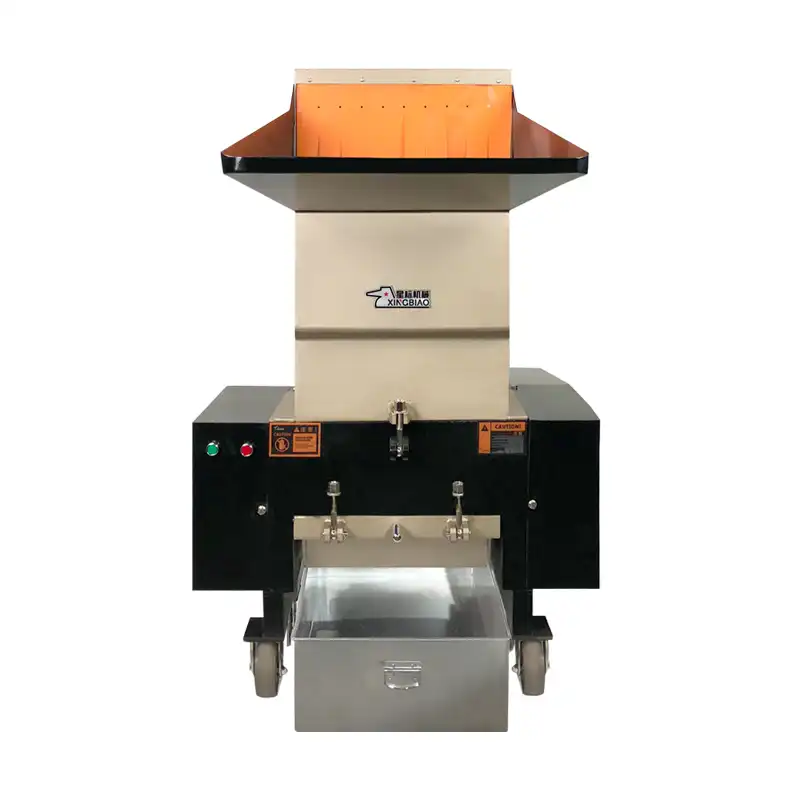
Types of Pharmaceutical Pulverizers and Their Suitability
To choose the right size reduction tools, you need to match the technology to the properties of the material and the goals of the production. Depending on the type of material, the output rate, and the fineness needs, different pulverizer designs work best.
Hammer Mill Systems
Pharmaceutical pulverizers, hammer mills have fast-moving tools that hit materials against screens with holes in them. This rough impact action works well for brittle, crystallized materials that need to be processed quickly. By changing the size of the perforations, the interchangeable screen system lets workers change the end particle size. Because throughput capacity changes with motor power and room space, hammer mills can be used for both small-scale testing and mass production.
Centrifugal and Pin Mill Technologies
In centrifugal mills, particles and fixed pins hit each other at high speeds, which breaks up the material. Compared to hammer mills, this method makes grain sizes that are more evenly spread out, which is good for recipes that need to meet strict requirements. Because the dwell times are shorter, pin mills are better at working with heat-sensitive materials. While getting fine particle results that are good for advanced drug delivery systems, the energy use stays modest.
Ball Mill and Jet Mill Options
The rolling media in ball mills slowly grind materials by compressing and wearing them down over and over again. This gentle action keeps delicate chemicals safe, but it takes longer to process. Jet mills use streams of compressed air or inert gas to speed up particles that hit at high speeds, making ultra-fine powders without any mechanical touch. Jet milling gets rid of the risk of pollution from metal wear, but it needs more energy and special equipment.
Wet Versus Dry Processing Methods
Pharmaceuticals mostly use dry pulverization because it skips the steps of handling solvents and drying. However, wet milling works best with materials that tend to collect static electricity or make exploding dust. Using liquid media also makes it easier to get particles smaller than a micron, which isn't possible with dry methods. When making choices about purchases, people have to weigh the difficulty of the process against the performance needs and safety concerns that are unique to each recipe.
Performance, Maintenance, and Safety in Pharmaceutical Pulverization
Equipment success over time relies on following strict maintenance procedures and taking all necessary safety precautions. Pharmaceutical companies have a hard time finding the right balance between high output needs and strict cleaning and worker safety needs.
Routine Maintenance Protocols
Wear parts in pharmaceutical pulverizers should be taken care of in preventive maintenance plans before they stop working properly. When the blade is inspected, it shows that it has lost its sharpness and has surface damage that needs to be fixed or replaced. Screen integrity checks keep output streams clean by removing bits that are too big. Lubricating bearings keeps them running smoothly and keeps them from breaking down too soon. To keep electrical lines safe from arcing, they need to be tightened up every so often. Recording all upkeep tasks helps with following the rules and making sure the equipment lasts as long as possible.
Quality Control and Particle Analysis
Laser diffraction, sieve analysis, or microscopes can be used to measure particle size, based on how accurate the results need to be. Sampling methods need to get material that is typical of all production runs. Trending problems can be found with statistical process control charts before they lead to fails in meeting specifications. Accurate measurements are made possible by calibrated tools and tested analytical methods, which are what regulatory auditors look for when they visit a facility.
Operator Safety and Industry Standards
Pharmaceutical pulverization creates dust that can be breathed in and can cause explosions. Proper air systems with dust collection tools keep workers safe and keep different runs of products from getting contaminated. In places where pulverization is happening, people are required to wear safety gear like respirators, safety glasses, and hearing protection. Lockout-tagout methods keep equipment from starting up by mistake while it is being cleaned or maintained. Following OSHA rules and FDA advice documents shows that you care about both worker safety and product quality.

How to Choose the Right Pharmaceutical Pulverizer: A Procurement Guide
Choosing the right equipment has practical and financial effects that last longer than the cost of the buy itself. Professionals in procurement have to look at a lot of different things that affect the total cost of ownership and the ability to produce.
Assessing Production Requirements
The throughput ability should be enough to handle the current amount of production while still leaving room for growth in the future. The right type of crusher depends on the material's hardness, moisture level, and chemical stability. Target particle size requirements and distribution tolerances limit the types of tools that can be used to meet quality standards. Whether you want batch or ongoing processing affects how the equipment is set up and how the technology is integrated.
Evaluating Supplier Credentials
OEMs' image shows how much they know and how much they care about their customers' success. Manufacturers who have been specializing for decades come up with polished designs that work better than stock options. The terms of a warranty show that you trust the technology to last and protect you financially if it breaks down early. The speed of reaction when technology problems threaten production plans depends on how easy it is to get after-sales service. When compared to help sites far away, local service centers cut down on travel costs and downtime.
While Xingbiao specializes in plastic crushing technology rather than pharmaceutical applications, our 30-year focus on pulverization tools demonstrates the value of specialized expertise. Companies seeking pharmaceutical pulverizers benefit from similar evaluation criteria: checking the quality of the build, making sure performance claims are true by calling customer references, and making sure the company can provide full technical support.
Customization and Total Cost Analysis
Standard equipment might need to be changed so that it can work with other production lines or with materials that have special features. Flexible sellers are different from fixed commodity vendors because they can customize their goods. When figuring out the total cost, you should include how much energy the equipment uses, how much spare parts cost, and how many hours of upkeep work are expected over its estimated lifetime. Leasing is an alternative way to get money that lets you keep your money for other investments and gives you access to the newest technologies.
Future Trends and Innovations in Pharmaceutical Pulverizer Technology
Pharmaceutical production skills are always changing as technology improves. Equipment providers put money into new ideas that make things more efficient, last longer, and follow the rules.
Automation and Process Control
Smart sensors constantly check the factors of equipment, finding changes that point out problems before they become too big to fix. Automated systems change the working conditions on the fly to keep the quality of the output constant, even if the raw materials change. Digital connectivity makes it possible for technology experts to fix problems without having to visit the spot. Data analytics finds ways to improve performance that use less energy and make more things possible.
Sustainability and Energy Efficiency
Concerns about the environment lead to design changes that use fewer resources. Variable-frequency drives change the motor speed based on the current load. This keeps energy from being lost when working needs are low. Heat recovery devices collect heat energy that can be used to control the temperature inside a building. Low-noise designs cut down on noise pollution that affects nearby communities and make the workplace better for people who operate heavy machinery.
Regulatory Compliance Evolution
Regulatory agencies keep raising the bar for process paperwork and equipment approval. Today's pulverizers are made with features that make cleaning easier and stop cross-contamination. Biocompatibility standards are met by building materials, so leachables that compromise medicine quality are not used. Current good manufacturing practice (cGMP) standards are in line with equipment testing methods. This makes it easier for pharmaceutical companies to get regulatory approval.

Conclusion
Pulverization is an important part of making medicines, and the choice of tools and how the process is controlled directly affects the quality of the product, how well the operation runs, and how well it meets legal requirements. Manufacturers can make choices that help them meet their production goals if they know about the different types of pulverizers, how to maintain them, and what to think about when buying them. As progress is made in pharmaceutical research toward more complicated drug delivery systems, pulverization technology changes to meet the needs of more exact particle specs. In this ever-changing industry, manufacturers who put quality tools, source knowledge, and full technical support at the top of their list of priorities will be able to stay ahead of the competition for a long time.
FAQ
What particle sizes can pharmaceutical pulverizers achieve?
Depending on the type of equipment used and the working settings, pharmaceutical pulverizers can make particles as small as a few microns. The output of a hammer mill is usually between 100 and 500 microns, while the output of a jet mill is less than 10 microns. The exact size needs rely on how the drug is to be made and how fast it is supposed to dissolve. The possible fineness is also affected by the material's qualities, such as how hard it is and how easily it breaks. Sometimes, more than one pass through the processing steps leads to better results than a single stage action.
How does pulverizer selection affect production costs?
The equipment you choose affects both your initial investment and your ongoing operating costs. High-efficiency designs use less energy per kilogram of processing, which lowers the cost of utilities. Durable building cuts down on the number of upkeep tasks and costs for replacement parts. The processing time needed for output batches is based on the throughput ability. If the wrong technology is chosen, it may be necessary to buy new, expensive tools when production needs change, or the amount being made grows.
What safety considerations apply to pharmaceutical pulverization?
When working with flammable materials, making sure there is enough airflow, wiring, and explosion-proof electrical parts is necessary to avoid dust explosions. Inhalation safety through local exhaust ventilation and respiratory tools keeps workers from breathing in dangerous dust. Hearing protection programs may be needed because of the noise level. Equipment safety keeps people from touching moving parts. Cross-contamination between pharmaceutical goods can't happen because of cleaning validation processes.
Partner With Specialized Equipment Manufacturers for Your Processing Needs
To choose effective pharmaceutical pulverizers and size reduction tools, you need to work with manufacturers who can show they have a lot of technical knowledge and a track record of doing great work. For thirty years, Xingbiao has only worked on developing crushing and pulverization technology. This kind of specialized attention is what sets great equipment makers apart. Our engineering team has worked with big companies to improve ideas that deal with problems that come up in real production.
Our equipment is made of strong steel and has stress-relieved bonding that keeps the dimensions stable even when it's working at high loads all the time. Blade materials like SKD-11 and Cr12MoV are pressure-heated and processed in a freezer, which makes them harder and more resistant to wear. When compared to standard setups, optimized blade shape and chamber design increase efficiency by more than 20% while lowering energy use. Downtime is kept to a minimum with quick-change screen systems and easy-to-reach repair spots.
Whether your business works with pharmaceutical intermediates, chemical compounds, or industrial materials that need to be precisely shrunk, our expert team can help you with your application needs. Get in touch with our pharmaceutical pulverizer maker reps at xingbiaocrusher@xingbiaocrusher.com to talk about how custom crushing solutions can help your business.
References
1. Handbook of Pharmaceutical Granulation Technology, Third Edition, Dilip M. Parikh, Informa Healthcare, 2009.
2. Pharmaceutical Dosage Forms: Tablets, Volume 1, Manufacturing and Process Control, Herbert A. Lieberman and Leon Lachman, Marcel Dekker, 1989.
3. Particle Size Measurement: Interpretation and Application, Roy Wootton and Brian Scarlett, Royal Society of Chemistry, 1992.
4. Unit Operations in Pharmaceutical Engineering: Volume 2, Size Reduction and Size Separation, Kenneth A. Connors, Wiley-Interscience, 2002.
5. Pharmaceutical Engineering: Principles of Unit Operations in Pharmaceutical Processing, Gary Martin, CRC Press, 2015.
6. Safety and Health in the Use of Machinery: Code of Practice, International Labour Organization, Geneva, 2013.
Learn about our latest products and discounts through SMS or email