- English
- French
- German
- Portuguese
- Spanish
- Russian
- Japanese
- Korean
- Arabic
- Greek
- German
- Turkish
- Italian
- Danish
- Romanian
- Indonesian
- Czech
- Afrikaans
- Swedish
- Polish
- Basque
- Catalan
- Esperanto
- Hindi
- Lao
- Albanian
- Amharic
- Armenian
- Azerbaijani
- Belarusian
- Bengali
- Bosnian
- Bulgarian
- Cebuano
- Chichewa
- Corsican
- Croatian
- Dutch
- Estonian
- Filipino
- Finnish
- Frisian
- Galician
- Georgian
- Gujarati
- Haitian
- Hausa
- Hawaiian
- Hebrew
- Hmong
- Hungarian
- Icelandic
- Igbo
- Javanese
- Kannada
- Kazakh
- Khmer
- Kurdish
- Kyrgyz
- Latin
- Latvian
- Lithuanian
- Luxembou..
- Macedonian
- Malagasy
- Malay
- Malayalam
- Maltese
- Maori
- Marathi
- Mongolian
- Burmese
- Nepali
- Norwegian
- Pashto
- Persian
- Punjabi
- Serbian
- Sesotho
- Sinhala
- Slovak
- Slovenian
- Somali
- Samoan
- Scots Gaelic
- Shona
- Sindhi
- Sundanese
- Swahili
- Tajik
- Tamil
- Telugu
- Thai
- Ukrainian
- Urdu
- Uzbek
- Vietnamese
- Welsh
- Xhosa
- Yiddish
- Yoruba
- Zulu
Choosing a Plastic Crusher Screen Size (26 mm vs 50 mm)
When choosing between 26 mm and 50 mm plastic crusher screen openings, the main things that matter are the type of material you are working with and the finished particle size you need. The 26 mm screen gives you finer particles, which are great for injection molding feedstock and other uses that need uniformly smaller particles. The 50 mm screen, on the other hand, gives you higher throughput for bulk recycling operations that process films, containers, and mixed plastic waste where moderate particle size is enough. Knowing these differences will help you make sure that the tools you buy fit your output goals and the properties of the materials you're using.
Understanding Plastic Crusher Screens and Their Role in Processing
What Plastic Crusher Screens Actually Do
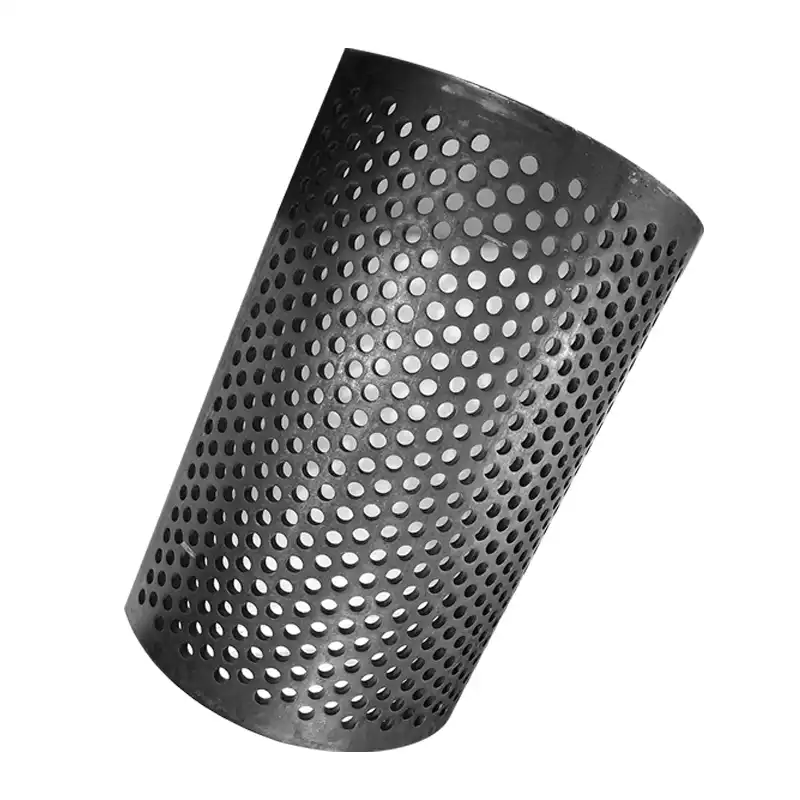
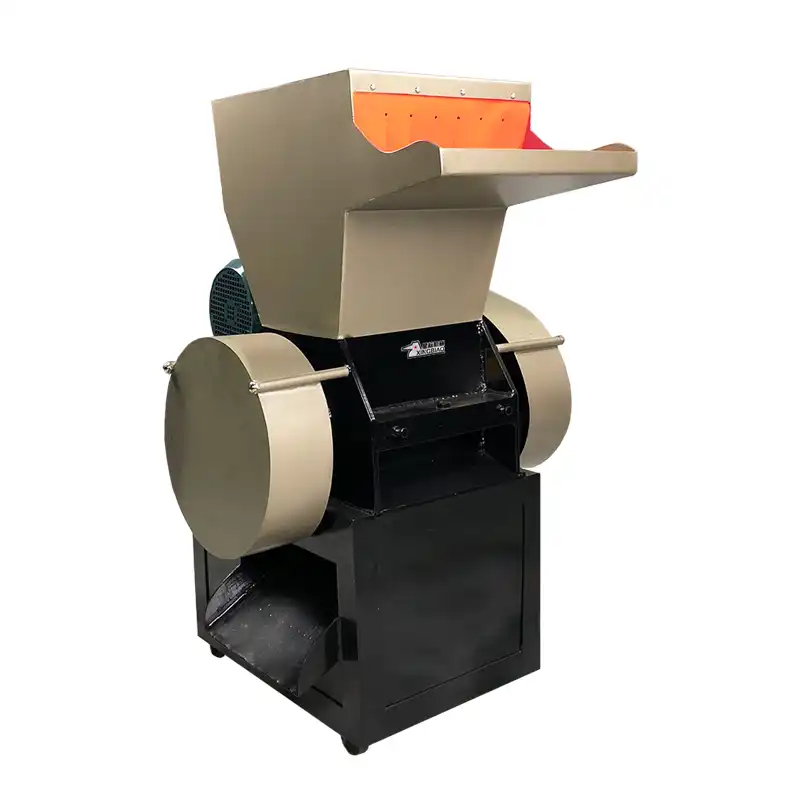
Two very important jobs are done by the plastic crusher screen in your size reduction device. When the machine is running, fixed counter-knives cut through plastic materials with rotating blades on a high-speed rotor. Particles that are the right size go through the perforated screen plate, while pieces that are too big stay in the breaking room to be processed further. This process is very good at controlling the end particle size. The screen keeps metal, wood, and glass shards from mixing with the processed plastic while also acting as a separation divider. This protects equipment further down the line and keeps the material pure.
How Aperture Size Changes Everything
The size of the screen opening directly affects how particles are distributed and how they behave during processing. Smaller bits can't get through a 26 mm screen, which makes uniform material that can be used for injection molding, extrusion, and other processes where precision is important. This arrangement needs more passes through the crushing machine, which takes longer to process but results in more uniform particles. On the other hand, 50 mm openings let bigger particles leave quickly, which greatly increases the output capacity.
Screen Types and Operational Integration
Different types of screens are used in modern crushing devices to meet different operating needs. Because they are welded straight into the frame of the crushing room, fixed screens are simple and reliable. At Xingbiao, our quick-change screen layout cuts the time it takes to replace screens to less than 15 minutes, so work doesn't stop. Some places that deal with waste streams that change a lot keep both 26 mm and 50 mm screens and switch between them based on the features of the materials going in. Understanding how the screen fits into your whole working chain, from feeding systems to air transport to storage, will help you choose an aperture that works with your whole process and doesn't cause problems at the beginning or end.
Key Criteria for Choosing Between 26 mm and 50 mm Plastic Crusher Screens
Material Type and Physical Characteristics
When it comes to plastic crusher screen selection, rigid plastics like PVC pipes, acrylic sheets, and injection-molded parts behave differently than flexible ones. Hard plastics that are hard to break apart easily break apart and flow easily through either size of hole. For remanufacturing purposes, the 26 mm arrangement here gives accurate particle sizing. Soft plastics like films, weave bags, and field wrap are harder to separate when the holes are smaller. Field data from recycling centers shows that 50 mm screens are about 40% less likely to get jammed when processing twisted film trash than 26 mm screens. Problems with operations can be avoided by matching the opening size to the brittleness and tangling potential of the material.
Throughput Capacity Requirements
The best screen to use depends a lot on how much work you do every day. 50 mm apertures are usually better for operations that crush more than 2,000 kg per hour because they let more material run through the machine. The bigger holes lower the backpressure inside the crushing box, which lets the material keep going in without breaking. 26 mm screens are more useful in smaller production areas that handle 500 to 1,000 kilograms of goods per hour, especially when processes further down the line need uniform particle sizes. We've seen that setting reasonable output goals for the screen aperture keeps equipment from working below or above its design capacity for long periods of time, which both speeds up wear and tear and lowers efficiency.
Downstream Process Compatibility
What happens after crushing can't be left out of your screen choice. For proper hopper flow and uniform melt behavior in injection molding, particles must be less than 30 mm. This means that 26 mm screens are almost a must. Extrusion lines can handle a wider range of particle sizes and can easily handle 50 mm screen output. When washing and separating mixed plastic trash, systems often list the largest particles that can be. Make sure you know what these standards are before you buy. We talked to a recycling center in the southeast of the United States that kept having problems with their separation equipment until they switched from 50 mm screens to 26 mm screens. This brought the particle sizes within the separator's design limits. Your breaking activity is part of a processing chain, so the choice of screen must take the whole chain into account.
Durability and Maintenance Demands
How long a screen lasts depends a lot on the size of the opening and how the material flows through it. The 26 mm design has more perforation edges per unit area, which means there are more stress concentration places where cracks could start. But the smaller holes spread the force of impact over more touch points, which lowers the load per hole. At Xingbiao, we use SKD-11 mold steel that has been vacuum-heated and processed in a cold environment to make screens that are harder than HRC 58. This material design makes screens last 60–80% longer than normal screens, no matter what size the aperture is. Replacement frequency should be taken into account when figuring out the total cost of an operation that works double shifts or nonstop. Screens with 26 mm openings need to be changed more often, which can cancel out their lower starting cost through higher labor and downtime costs.
Comparing Performance and Benefits: 26 mm vs 50 mm Plastic Crusher Screens
When 26 mm Screens Excel
In certain tactical situations, the 26 mm opening is useful. When this arrangement is used, factories that work with injection molding sprues, runners, and discarded parts get the best results. The small opening keeps the particles in the 12–30 mm range that current injection molding machines like, so there is no need for screening processes further down the line. Particle size differences stay within ±5 mm, which is a lot better than ±12 mm with bigger openings. This means that the material is much more uniform. This stability keeps the melt behavior stable during cleaning, which lowers the number of defects in the finished product. Because the particles stay in the breaking room longer, a little more energy is used per kilogram, but this isn't a big deal when particle quality directly affects product value.
Where 50 mm Screens Dominate
50 mm apertures are very helpful for recycling centers that deal with a lot of post-consumer garbage, packing materials, and big things. When handling the same material, 35–50% more throughput is often achieved than with 26 mm screens. The bigger holes make it almost impossible for film waste, woven bags, and odd-shaped objects to get stuck or bridge them. As more material leaves the crushing room more quickly, blade contact time decreases, resulting in lower power usage per kilogram. Our high-power crusher types with 50 mm screens have been shown to be able to process more than 3,500 kg of mixed rigid plastic trash per hour. When maximum processing speed is more important than particle size accuracy, which is most of the time in mass recycling, these openings really shine.
Addressing Performance Bottlenecks
When screen sizes aren't right, practical problems are bound to happen. The 26 mm opening with very flexible films constantly gets clogged because material weaves through the holes without separating cleanly. In some cases, moving to 50 mm screens doubled the effective output by getting rid of stoppages caused by jams. On the other hand, 50 mm screens that process weak materials for injection molding feedstock make too many large particles, which can damage downstream screening equipment or make molding impossible. By noticing these trends, you can choose the screen ahead of time instead of having to fix problems after they happen. Blade geometry also affects the choice of screen.
Maintenance Patterns and Longevity
The care rates for the two aperture sizes are different. Screens with 26 mm holes need to be checked for perforation edge wear and possible crack spread from stress buildup more often. Fines buildup on the screen surface, which decreases the useful open area, needs to be taken into account in cleaning procedures. Ultrasonic cleaning or devices that use pressurized air keep the flow properties at their best. The 50 mm design can handle contamination better because it has a bigger open area. However, sharp contaminants like metal pieces can deform perforations more easily because there is less structural support between the openings.
Procurement Strategies for Plastic Crusher Screen Solutions
Identifying Reputable Manufacturers and Suppliers
There are a lot of sellers in the plastic crusher screen market, and their quality levels are very different. Instead of looking at general equipment catalogs, procurement teams should focus on makers that show they specialize. At Xingbiao, we've only been working on crushing technology for 30 years, never branching out into other goods. This shows the level of knowledge that leads to better equipment performance. Check to see if possible suppliers have their own research and development departments. Our 20-person engineering team and partnerships between businesses and universities with big companies show that we are committed to constant innovation. For screen building, ask for material certifications. Premium standards like SKD-11 tool steel, documented heat treatment methods, and measurable hardness grades can tell the difference between real quality and marketing promises.
Evaluating Cost Beyond Purchase Price
The starting prices for the 26 mm and 50 mm screens from reliable manufacturers are about the same, ranging from $800 to $2,200, based on the size of the crusher and the type of material being used. The big differences in costs show up when the business is running. Find the total cost of ownership by adding up the costs of energy use, upkeep work, replacements, and downtime. A 50 mm screen that costs $1,200 but has a 40% higher rate is a better deal than a $900 screen that needs to be replaced often. During conversation, we give procurement professionals detailed operating cost projections that help them show financial stakeholders how investments will pay off with clear dates for when the investments will be returned.
Customization Options and Technical Support
Standard screen options work well for many uses, but customizing them is often the best way to handle difficult material sources. For certain plastics and use situations, the perforation designs, screen thickness, mounting arrangements, and surface processes can be made better. For recycling tires, handling fibers, and dealing with polluted trash streams that regular screens couldn't handle well, our customized crusher division has made screens just for those tasks. In addition to hardware, long-term success depends on full expert help. We promise to answer your questions 24 hours a day, help with installation, train operators, and set up follow-up meetings. This support system lowers the risk of execution and speeds up the return on your equipment investment. This is especially helpful when adding new technology to an existing business.

Maintenance, Troubleshooting, and Lifespan Optimization
Essential Inspection and Cleaning Routines
Screen service life is greatly increased by following regular repair procedures. Visual checks should be done once a week to look for hole edge wear, crack start-up, and material growth that is blocking flow. Deep cleaning once a month gets rid of fines and other contaminants that are embedded. Compressed air at 90 PSI can clear 50 mm openings well, while ultrasonic cleaning or chemical degreasing are better for 26 mm screens to get rid of all contaminants completely. Professional inspections every three months by trained techs find problems early on, before they become major problems. Our open design architecture lets you get to all of the important parts without any problems, which cuts cleaning time by half compared to sealed systems. Keep track of all the repair tasks you do to find out how your materials and equipment wear over time.
Troubleshooting Common Screen-Related Issues
Too many fines are being made, which means the blades are dull and not the screen. Sharpen or replace the cutting edges before thinking the screen is broken. If there is less material going through the screen and you can see it bridging, it means that the opening is blocked because of dirt or plastic melting from too much friction heat. This can be fixed by cleaning the screen or slowing down the feed rate. If the screen base is breaking down or wearing unevenly, causing an uneven spread of material, you may notice strange vibration patterns during operation. Most perforation cracks start at stress concentration points. Finding these early on through checking keeps the screen from failing while it's being used. Instead of thinking that replacing the screen will fix all performance problems, you should carefully rule out all the factors when you're troubleshooting.
Knowing When to Upgrade or Replace
When to change the plastic crusher screen strikes a balance between the remaining useful life and the loss of performance. If you see hole damage, multiple cracks, or edge wear that is more than 2 mm, you should replace it right away, no matter how old it is. Performance metrics give objective replacement triggers—for example, if throughput drops 15% below baseline or energy consumption rises 10% despite the same amount of material being input, this means that the screen state is hurting efficiency. Some processes set replacement intervals based on the number of hours worked or the amount of material handled. This keeps unexpected failures from happening. The quick-change design we came up with makes it impossible to put off replacement because of difficult steps. Emergency breakdowns during busy production times can be avoided by replacing parts strategically during planned repair windows.
Conclusion
Choosing a screen aperture between 26 mm and 50 mm shapes the performance of your plastic crushing process in a basic way. The 26 mm choice gives you uniform particles that are needed for remanufacturing, and the 50 mm apertures give you the most flow for mass recycling. For proper design, you need to look at the properties of the material, the amount of work that needs to be done, how well it works with other processes, and the total cost of ownership, not just the buying price. For thirty years, Xingbiao has only worked on plastic breaking technology. This has shown us that screen choice, blade design, and structural engineering must all work together as a whole, not separately. Procurement experts who take the time to do detailed research and get advice from manufacturers can make choices that improve business efficiency for years to come.
FAQ
Can I Switch Between 26 mm and 50 mm Screens Without Modifying My Crusher?
If your machine's original design allowed for this, most good crushers can handle different screen sizes without any changes to the equipment. Our quick-change screen system lets you switch apertures with common tools in less than 15 minutes, so operations can adapt to different amounts of material. Check with the maker of your equipment to see if the blade design needs to be changed when the screen size changes. Some blade shapes work best with certain aperture ranges. Keeping both aperture sizes in stock gives sites that process different types of plastic more operating freedom.
How Do I Determine the Optimal Screen Size for Mixed Plastic Waste Streams?
When there are mixed trash lines, different needs have to be met. Check to see what kinds of materials make up most of your volume. If hard plastics make up more than 70%, the 26 mm screen should work fine. Even though some particles are too big, operations that handle a lot of film or flexible plastic usually get better total performance with 50 mm apertures. You might want to use upstream sorting to separate the different types of material so that the best breaking settings can be used for each type of plastic. We offer application analysis services that look at the specifics of your waste and suggest setups that balance throughput, particle quality, and operating efficiency.
What Maintenance Practices Most Significantly Extend Screen Lifespan?
Keeping pollution from doing damage has the biggest effect on life. Upstream magnetic separation gets rid of pieces of metal that bend holes and start cracks. By cleaning it regularly, you can stop material growth that speeds up wear through friction. When you stay within the planned flow limits, you keep the mechanical stress levels low. Impact forces on the screen frame are lessened when the blades are well taken care of. Our screens are made from SKD-11 tool steel that has been treated with a special heat that makes it resistant to wear. However, how well you use them will decide whether you get 2,000 hours or 5,000 hours of use before you need to replace them.
Partner with Xingbiao for Superior Plastic Crusher Screen Solutions
Choosing the right plastic crusher screen manufacturer will determine whether your equipment is a reliable production tool or a constant source of operating stress. Xingbiao has unique experience in this decision—we have been focusing on plastic crushing technology exclusively for 30 years, have a 20-engineer research team, and work with industry leaders like Nongfu Spring. This gives us knowledge that other equipment sellers can't match. Our screens are made from SKD-11 mold steel that has been vacuum heated and processed in a cryogenic chamber. This gives them better wear protection and a 60–80% longer service life than normal options. Our quick-change design cuts down on maintenance downtime by a huge amount, and our open layout makes it easier to clean and check.
We can make solutions that fit your unique material needs and production requirements, whether you need 26 mm screens for precise particle sizing in manufacturing or 50 mm setups to maximize flow in recycling operations. Our full support starts with a consultation before you buy, where we look at your waste stream. It continues with installation and user training, and it lasts for as long as your equipment is in use, with 24-hour expert help and guaranteed spare parts available. Email our sourcing experts at xingbiaocrusher@xingbiaocrusher.com to talk about your application and get specific advice. We are your reliable plastic crusher screen source, and we can turn screen selection from a problem to an opportunity to gain a competitive edge.
References
1. Miller, R.T. (2021). Industrial Plastic Crushing Systems: Design Principles and Operational Optimization. Manufacturing Technology Press.
2. Chen, L., & Rodriguez, M. (2020). Screen Aperture Effects on Particle Size Distribution in Thermoplastic Recycling. Journal of Polymer Processing, 45(3), 287-302.
3. American Plastics Council. (2022). Best Practices for Plastic Waste Processing Equipment Selection. Industry Standards Publication APC-2022-08.
4. Thompson, K.J. (2019). Maintenance Strategies for Size Reduction Equipment in Recycling Operations. Industrial Equipment Publishers.
5. Zhang, W., Peterson, A., & Kumar, S. (2021). Comparative Performance Analysis of Variable Aperture Screens in Plastic Waste Processing. Recycling Technology Quarterly, 38(2), 156-174.
6. National Association for PET Container Resources. (2023). Equipment Specifications for Post-Consumer Plastic Processing Facilities. Technical Guidance Document NAPCOR-TG-2023.
Learn about our latest products and discounts through SMS or email